Paul Rogers
Proserpine, Australia
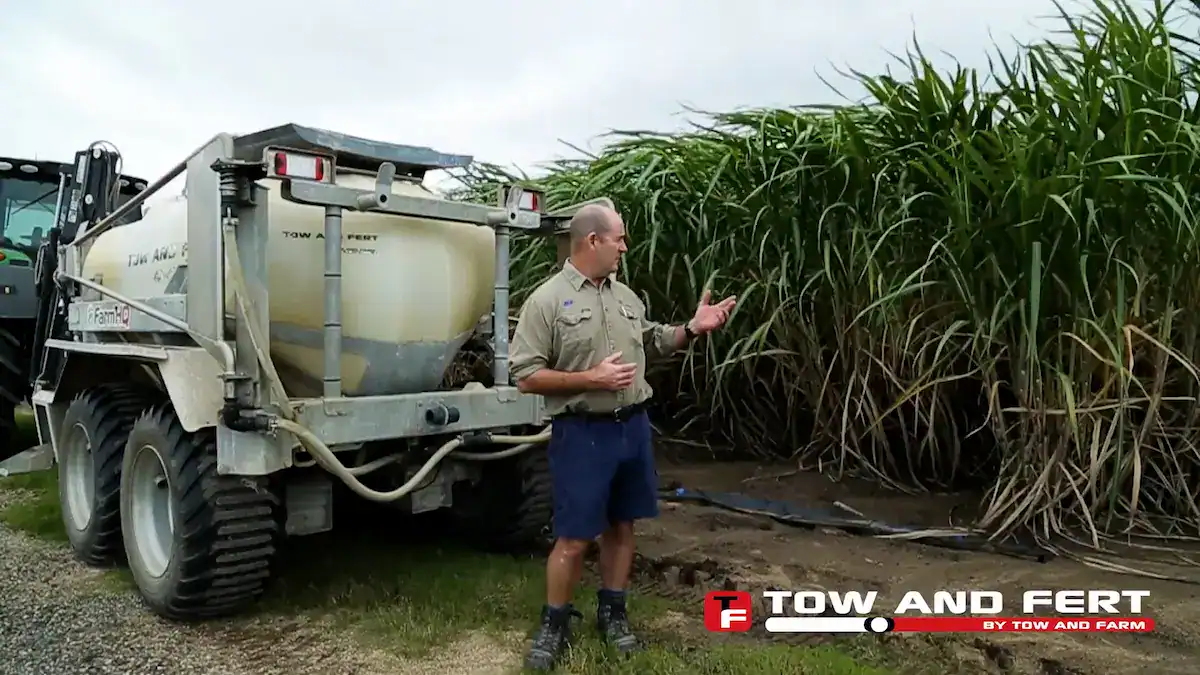
This story was filmed in 2018 and reflects one farmer’s own experience with their Tow and Fert. Every farm is different, so please treat it as a story rather than a forecast for your place.
Rethinking Cane Nutrition, Before the Crop Goes In
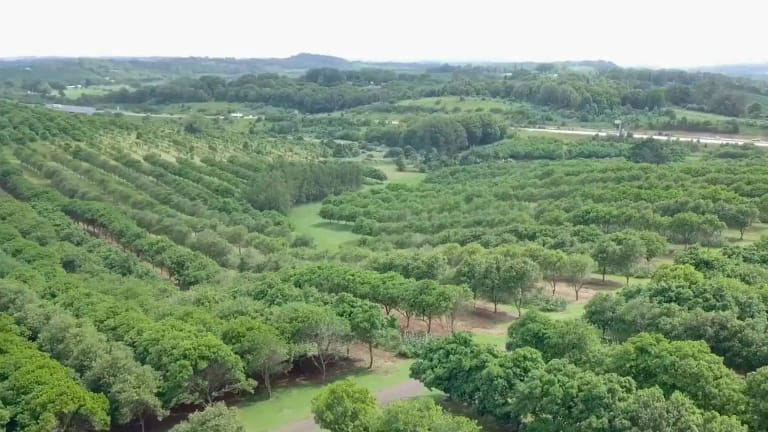
Paul Rogers farms around 300 hectares of sugar cane near Proserpine in North Queensland, producing roughly 25,000 tonnes a year, and also runs a contract services operation for other growers in the region. For Paul, the case for change starts with how the crop itself grows, and how the industry currently applies nutrients to it.
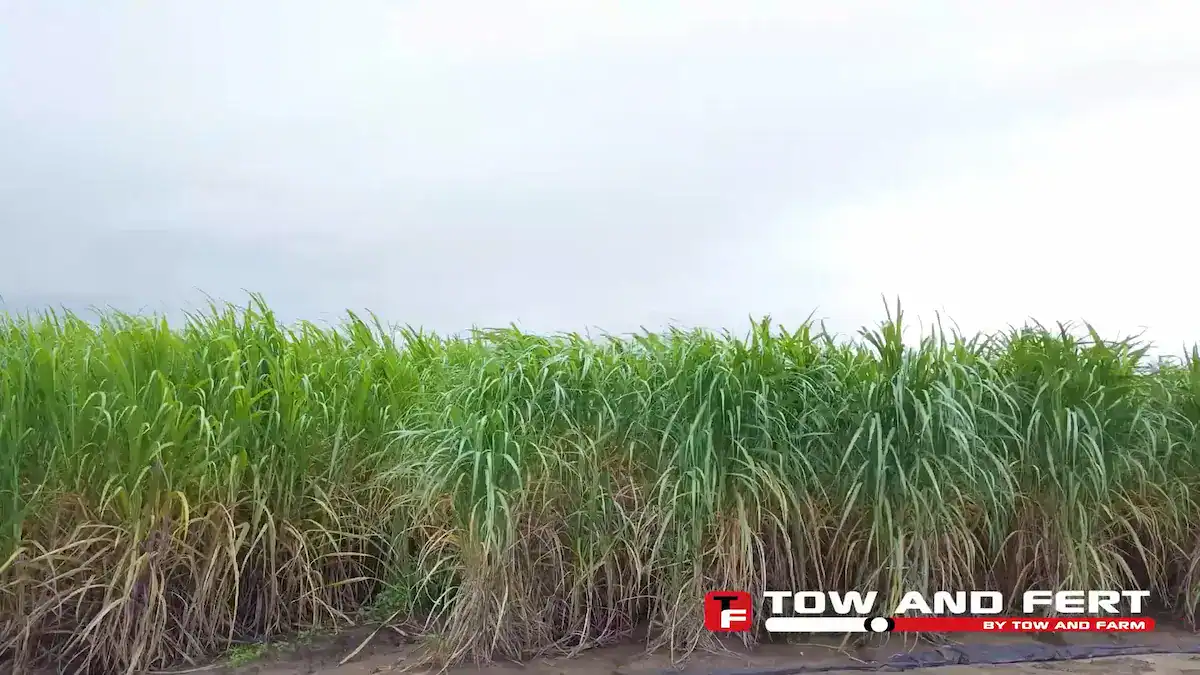
Sugar cane is typically grown on a five to six year rotation: one plant crop followed by four ratoon crops regrown from the stubble after each harvest. Yield falls away over that cycle, which is part of why Paul replants 15 to 20% of his area each year.
The standard practice across the industry has been to apply fertiliser once, early in the crop’s life. Cane grows fast and tall enough that by around six months, machinery can no longer get back into the paddock, so most operators put a large, single application of NPK fertiliser down at planting or shortly after, when the crop is still establishing its root system.
“It gets one application, generally speaking, a year, up to about 650kg of a mixed NPK fertiliser, drilled into what we call the stool, into the row of cane, buried about 10 to 15cm under the ground.”
Paul sees a structural problem with that timing. A large nutrient load applied before the plant has a developed root system is a load the plant isn’t yet equipped to use.
“Instead of putting 100% on up front when there’s no root system there, once we harvest that cane, the roots have got to regenerate. Ideally we’d leave it till the crop is about a foot tall, the roots under the ground will be about a foot long, and put our basal amount down then, maybe 50% of our fertiliser.”
There’s also a compliance dimension shaping how growers in the region think about application. Farms in this part of Queensland sit close to catchments that drain toward the Great Barrier Reef, and fertiliser run-off is under active scrutiny.
Thinking about Tow and Fert?
Talk with a specialist
Tell us about your operation and we’ll match the right model and setup for you.
“Farmers in this part of the world are under environmental pressure to try and stop run-off to the Great Barrier Reef, so we’re coming under scrutiny on our rates of application and methods of application.”
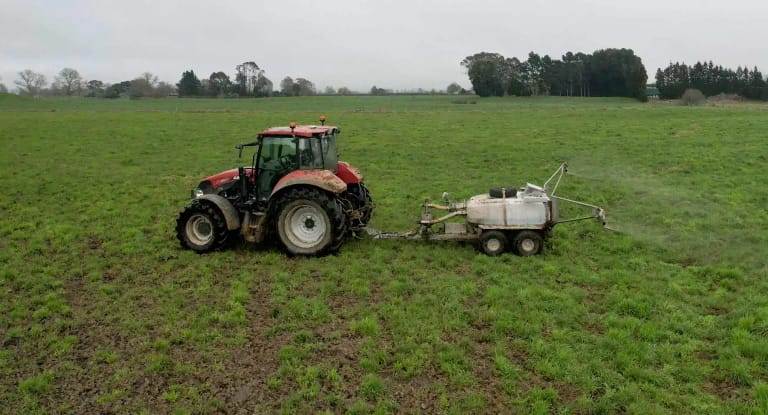
Paul’s plan is to split that single large application into a smaller basal amount at planting, followed by additional nutrients later, once the crop reaches around two feet and is entering its main growth phase, delivered as a foliar application rather than another buried dose.
“Once we’ve got two foot of cane, we’d go back in with smaller amounts by foliar application. That’s what we think the Tow and Fert might give us, a cost-effective method to do that, where we can dissolve the granular fertiliser and then apply it by foliar.”
The timing isn’t arbitrary. Paul points to the crop’s own growth pattern as the reason a split, later-timed application should be more effective than a single upfront dose.
“We know that as the crop gets bigger and into its green growth phase, that’s when it really wants the nitrogen and potassium especially. So we’d like to split our applications and put it on foliar.”
Industry-wide fertiliser efficiency is a well-known challenge in cane growing, and Paul sees better-timed, split applications as a more direct way to address it than continuing to apply the same way and hoping for a different result.
“We get told regularly that our industry isn’t very efficient with our fertiliser methods, down to 30% efficiency. We’d like to not keep fighting that, but go with it, and go with applications based on crop uptake.”
For Paul, the next step is straightforward: put the approach into practice.
“We think the Tow and Fert will certainly help us split the applications. We see it giving us more flexibility, more fertiliser use efficiency. We just need to get in and use this, and achieve what it set out to do.”